


Promising Programs & Practices
Awareness & Education
The Virginia Center on Aging at Virginia Commonwealth University
The Virginia Center on Aging at Virginia Commonwealth University has developed innovative materials to support older adults and advance elder justice, including their brief, animated video series on a range of topics including ageism, multidisciplinary teams, elder mistreatment, and recognizing abuse. Access the videos and other materials here.


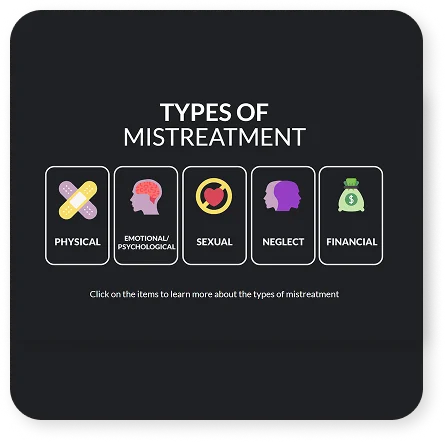
The Elder Abuse Curriculum for Medical Residents and Geriatric Fellows
The curriculum was developed by faculty at the University of Southern California in collaboration with clinicians at the Universities of California, Irvine, San Diego, and San Francisco, to address the need for training on elder abuse prevention, identification, and response among frontline healthcare professionals. The engaging, interactive curriculum educates clinicians in the foundational and practical information they need to effectively detect and address abuse.


Holistic Models
RISE (Repair Harm, Inspire Change, Support Connection, Empower Choice)
RISE (Repair Harm, Inspire Change, Support Connection, Empower Choice) is an evidence-based program dedicated to the prevention of and response to elder abuse and self-neglect in the community.


Caregiving Interventions

COACH (Comprehensive Older Adult and Caregiver Help)
COACH (Comprehensive Older Adult and Caregiver Help) is a strengths-based, person centered caregiver support intervention developed for caregivers of older adults with chronic illness, including dementia, to reduce mistreatment.

Social Connectedness
The Carmel B. Dyer Second Family Program
The Carmel B. Dyer Second Family Program, named after the Houston doctor who revolutionized the approach to geriatric healthcare across the country, is a volunteer program that brings connection and community to isolated older adults. Volunteers are trained to identify and respond to elder mistreatment and provide support to family caregivers.


The AARP Foundation Experience Corps
The AARP Foundation Experience Corps is a nationally recognized, intergenerational volunteer program that trains adults over 50 to tutor young students in reading, helping them reach grade-level proficiency by the end of third grade. The program has been found beneficial for students, with reported improved literacy, social, and emotional skills, and for volunteers who reported enhanced physical and mental engagement, sense of purpose, and connection.

Multidisciplinary Teams
PEDAL (Pasadena Elderly and Dependent Adult Liaisons)
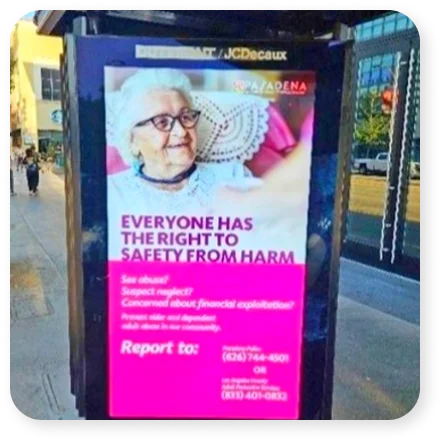
PEDAL (Pasadena Elderly and Dependent Adult Liaisons) is the first multidisciplinary team focusing on long-term care facilities. PEDAL’s mission is to improve the quality of life of residents in long-term care facilities through education, community outreach, and enforcement. In a novel approach, PEDAL has developed bulletins for facilities and promoted awareness through bus shelter public service announcements.
Webinar – PEDAL: A Grass Roots Solution to Improving Long-Term Care


San Diego’s Elder Justice Task Force (EJTF)
San Diego’s Elder Justice Task Force (EJTF) is a multidisciplinary task force formed by the San Diego District Attorney’s Office to combat elder fraud. The task force includes the San Diego District Attorney’s Office, the FBI, Adult Protective Services, the U.S. Attorney’s Office, local law enforcement agencies, and a community fusion center working together on fraud investigations and prosecutions. The team is disrupting scam networks and collecting and reporting fraud data to protect older adults from financial harms.


Share with Us
If you have a promising program or practice to highlight, please submit it for consideration by emailing ncea-info@acl.hhs.gov.